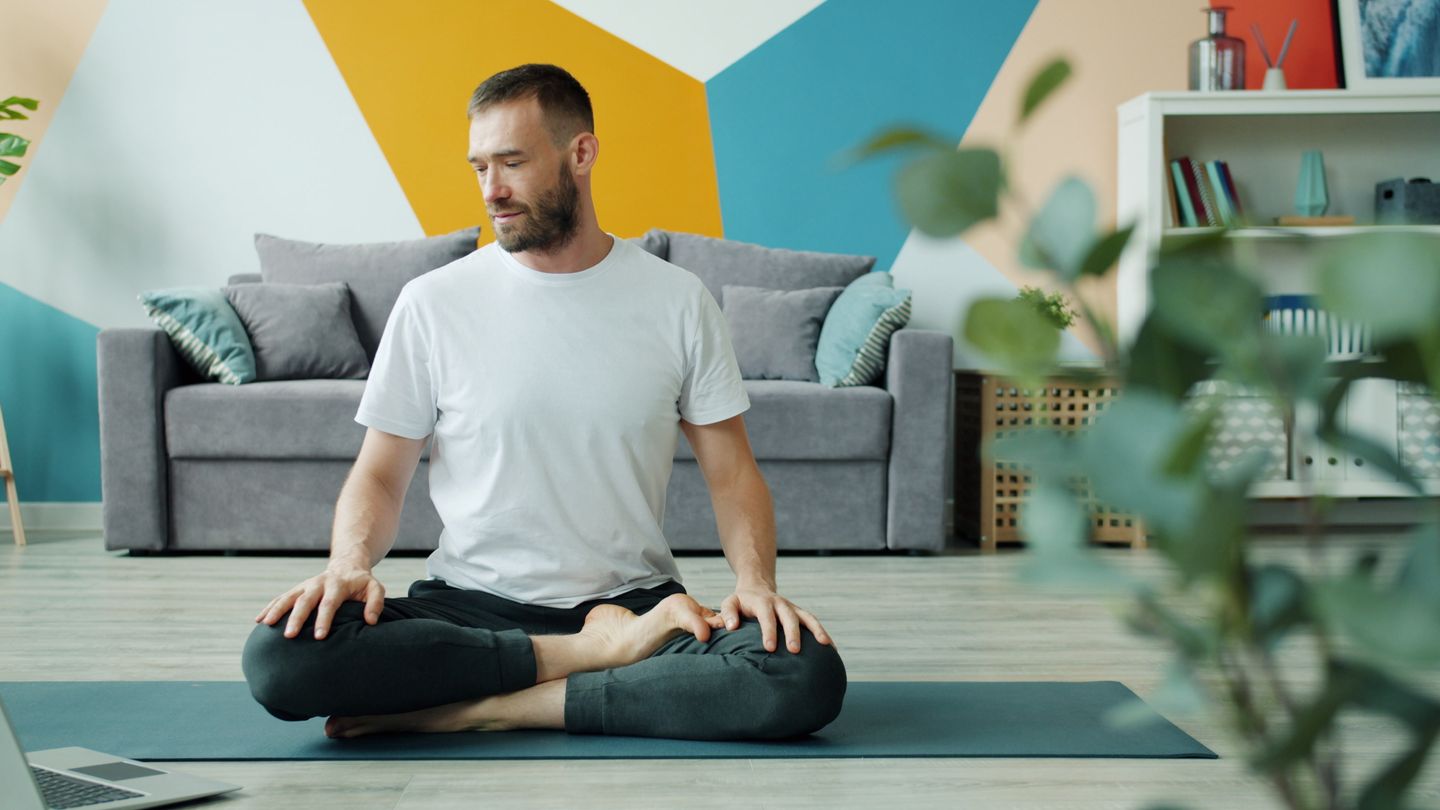
Begin with a comfortable position
Sit somewhere your feet and back can be comfortably supported, or stand in an easy position if you prefer. Let your hands rest without arranging them into a special shape. You can keep your eyes open and choose a familiar point in the room to look toward.
Before attending to breathing, notice the support beneath you. Feel the chair, the floor, or the steady surface under your hand. This is already a workable point of attention. There is no need to move inward immediately if looking around or noticing contact feels more comfortable.
Observe without improving
When you want to try, notice that a breath is happening. You might be aware of a small movement at the ribs or the sensation of air near the nose. Choose whichever detail is easiest to perceive, without searching for a stronger sensation or taking an extra-large breath.
Allow the next breath to arrive in its ordinary way. It may differ from the previous one, and your attention may drift before it is finished. You do not need to correct either event. Simply decide whether you would like to notice again or return to the surrounding room.
Keep the experiment brief
One observed breath can be the whole exercise. If you continue, avoid turning the observation into a demand for a slow or deep pattern. Let breathing remain comfortable, without holding it or forcing a longer out-breath. The useful question is whether this point of attention feels workable today.
If focusing on breathing feels unpleasant, choose something else immediately. You might listen to a nearby sound, feel your feet on the floor, or read a line of text. Changing focus is an ordinary choice within an awareness practice, not evidence that you need to try harder.
Carry the idea lightly
You can revisit this experiment during a seated pause, before an easy movement, or while waiting for a page to load. Choose a moment when noticing will not distract from a task requiring attention. No reminder or daily count is necessary unless it helps you approach the idea comfortably.
Finish by looking around and continuing with what you were doing. There is no particular feeling to verify afterward. A brief encounter with an ordinary breath is complete on its own, and your next experiment can use a different focus.
A few common questions
Should I take a deeper breath?
No. Let the breath stay natural and comfortable while you observe it briefly.
What if I dislike focusing on breathing?
Use another point of attention, such as the floor beneath your feet or a familiar sound.
Published by the Eiraluma journal.